


Excretion in Earthworm
- Prof. RS Rana
- Jul 6, 2023
- 1 min read
The excretory system of an earthworm consists of several structures that help remove metabolic waste products from its body. The primary organs involved in excretion in earthworms are called nephridia. Earthworms have numerous nephridia distributed throughout their body segments.
Here's an overview of how the excretory system works in earthworms:
Nephridia: Earthworms have two types of nephridia: the larger, more numerous septal nephridia and the smaller, fewer in number, integumentary nephridia. Both types of nephridia perform excretory functions. a. Septal Nephridia: These are located in each segment of the earthworm's body. They consist of a long, coiled tube with ciliated cells that filter waste products from the coelomic fluid (the fluid in the body cavity). The filtered waste, along with excess water and ions, pass through the nephridial tubules and are collected in a bladder-like structure called the urinary bladder. From the urinary bladder, waste is excreted out of the body through small pores called nephridiopores. b. Integumentary Nephridia: These nephridia are found in the earthworm's skin (integument). They function similarly to the septal nephridia but are smaller in size and less numerous.
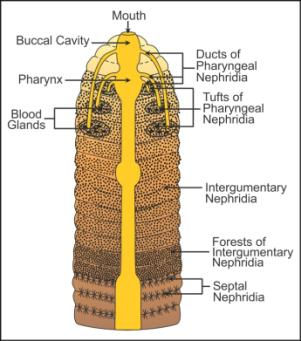
Coelom: Earthworms have a true coelom, which is a fluid-filled body cavity. Metabolic waste products and excess fluids from the earthworm's cells collect in the coelom. The nephridia extract the waste and excess water from the coelomic fluid, aiding in excretion.
Other Organs: The earthworm's digestive system also plays a role in excretion. Waste products from digestion, such as undigested food and metabolic byproducts, are eliminated through the anus.
Overall, the excretory system of earthworms helps maintain the balance of fluids and remove metabolic waste products from their body.


Comments